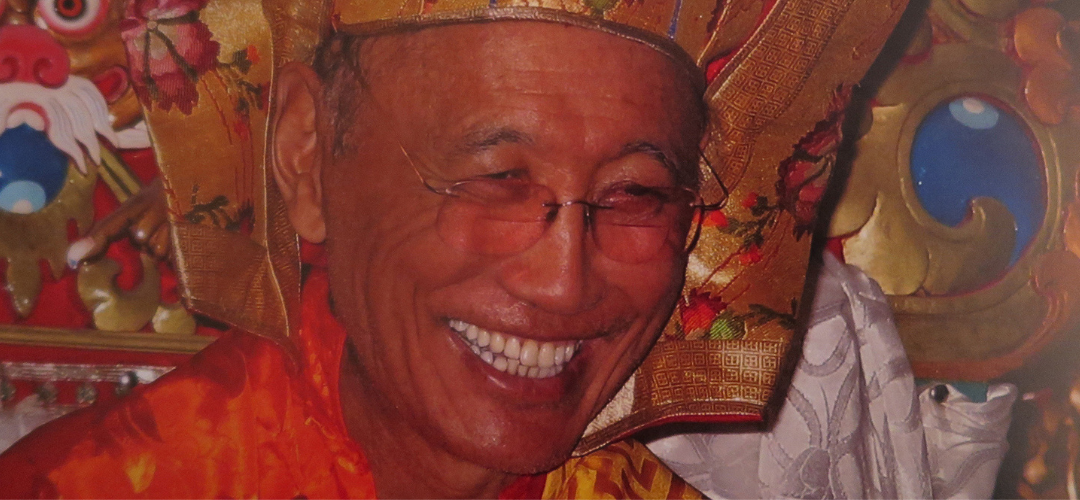
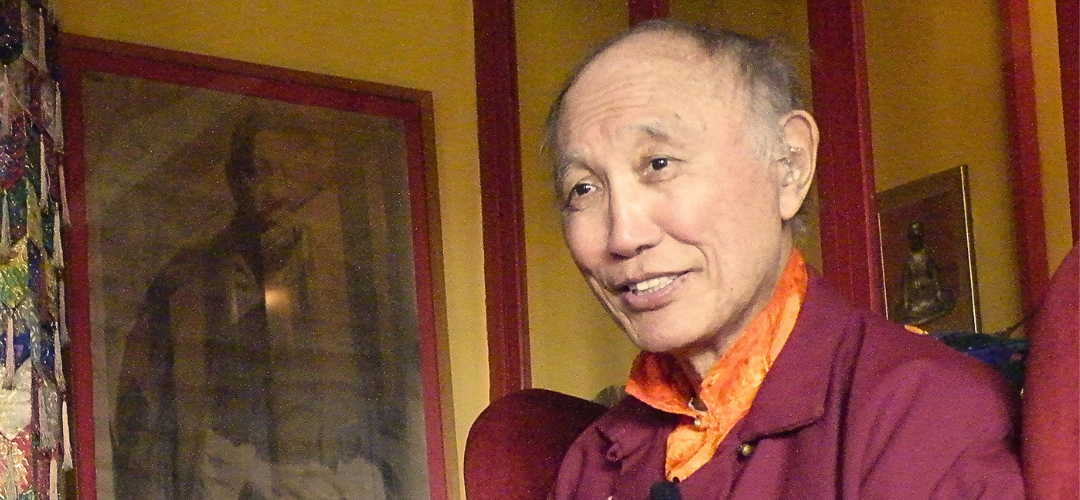
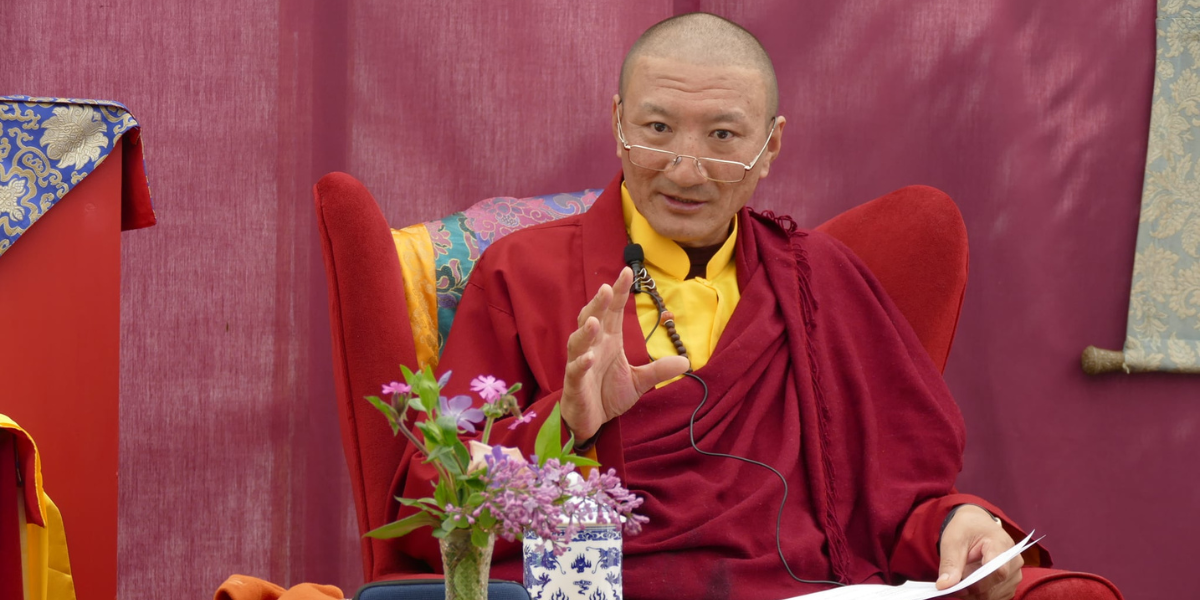
Kyabje Chime Rinpoche (1939-2026)

Kyabje Chime Rinpoche (1939-2026)

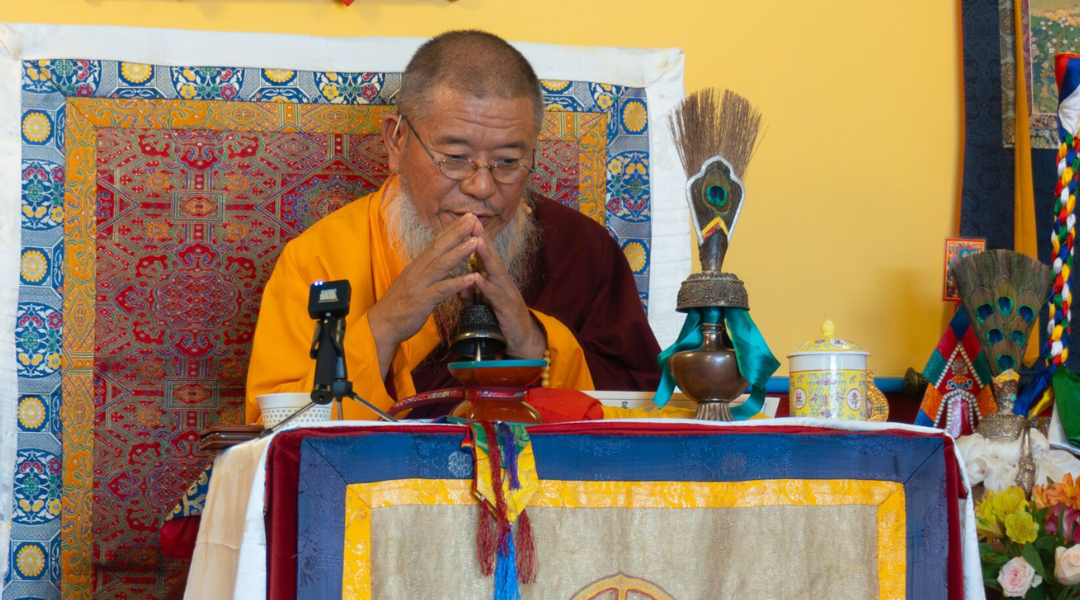
Kyabje Chime Rinpoche (10.10.1939 – 24.03.2026)

To our dear Dharma brothers and sisters around the world who have a connection with our precious teacher, Kyabje Chime Rinpoche.

It is with unbearable sorrow and deep regret that we inform you of the passing of our beloved teacher.

Rinpoche passed into Parinirvana this morning, 24th March 2026, the sixth day of the second month of the Fire Horse Year in the Tibetan calendar. Although physically unwell for some time, Rinpoche’s mind remained lucid and clear to the end. 

Rinpoche’s vast compassion, loving kindness and timeless wisdom touched all our hearts. To find such a realised and perfect teacher is precious beyond words, and we offer our love, devotion and heartfelt wish for Rinpoche to swiftly be reborn.  We are blessed beyond words to have been part of Rinpoche’s enlightened activities in establishing the essence of the authentic teachings of the Vajrayana here in the West.

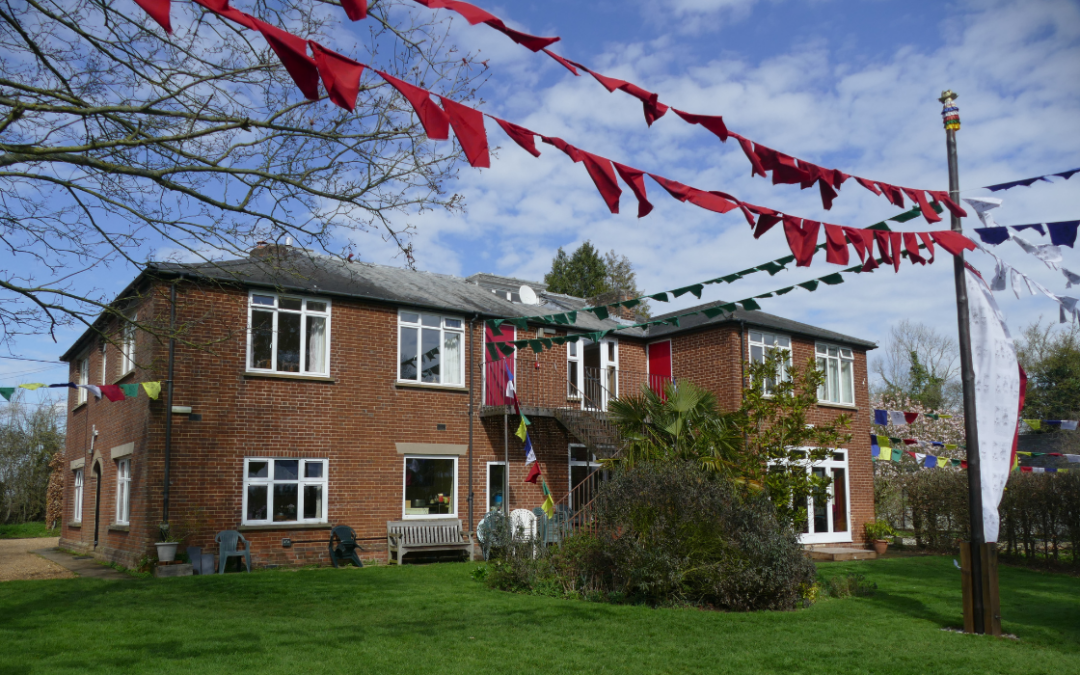
In accordance with Tibetan tradition, we will be performing prayers and practices here for him at Marpa House.  Further details will follow soon.

With immense sadness,

The Trustees of the Dharma Trust, Marpa House.
Preparing for our own Death

Preparing for our own Death

Be more alive

Recently, I have found myself listening to the Bardo Thodol (often called The Tibetan Book of the Dead) and wondering how best to prepare myself for death.

There has been a temptation to assume that the older I get, the more complex preparing for death is. I am now far more aware than I was ten or twenty years ago of the power of my habitual tendencies and how they have driven my life. I am equally more aware of just how difficult these patterns are to change – how much have I really reduced my anger? Is my meditation practice stable enough, or at all? It is easy for this kind of reflection to create despondency – if I didn’t get out of Samsara at the ends of my other innumerable lifetimes, is there any chance I could during this death?

Quite apart from the question of spiritual preparation, ageing has vastly complicated the mundane preparation needed for death – pensions, life insurance, funeral wishes, powers of attorney, statements of wishes, giving away dharma items, donations to charity, possible guardians for my son, distribution of property and who would look after the cats. Twenty-year-old me (who had no money or children) never worried about any of this. Lucky him.

Enter the Bardo Thodol. For me (and this is only a personal reflection), the text’s key message is confidence. Over and over again, we are reminded that every stage of the after-death process represents a chance for total enlightenment and complete liberation. The death process, the peaceful deities, the knowledge-holding deities, the wrathful deities, the bardo of becoming, the process of rebirth – all are replete with opportunities to recognise the nature of our mind. Moreover, the text repeatedly reminds us that our mind will be far more lucid and powerful after death than in the everyday state, and that our meditation will be the same. Most of all, the Bardo Thodol makes absolutely plain that what we do in this life – all our actions of body, voice and mind – have the power to help us after death. Good habits and tendencies count as much as bad ones.

The text also provides practical advice about how to deal with mundane attachments – don’t worry about your possessions because you can’t possess them after death anyway. Your relatives will give your goods away, and you have no power to determine who will ultimately get hold of them or how they will be treated. Therefore, my personal choice is to give items to practitioners I know, with no expectation of what they will do with them.

Overall, for me, the Bardo Thodol has lifted my heart and reinforced some of our precious Kyabje Chime Rinpoche’s teachings – let go of things you don’t need and have confidence.

Ben Henriques 

NOTICE – DONATING ITEMS TO MARPA HOUSE

Many members of the Sangha generously donate Dharma objects to Marpa House upon their death. However, please be aware that the House can very rarely accept such gifts due to a lack of space, and they usually have to be given away to other practitioners.

We are deeply grateful for everyone’s kindness, but would encourage people to make arrangements to donate Dharma items to friends on an individual basis, where possible, or check with us first. 

We are always very honoured and touched to include your loved ones who’ve passed away in our Chenresik practice and Dewachen prayers for 49 days. 

Prices to stay at Marpa House from 1st April 2026

Prices to stay at Marpa House from 1st April 2026

New accommodation prices from 1st April 2026

We review our prices at Marpa House annually and do our very best to keep any increases to a minimum. As a result of this review, from 1 April 2026, our accommodation prices will be slightly increased, broadly in line with inflation, while meal prices will remain unchanged.

This will be only our second price increase since 2022, despite the significant rise in the cost of living and ongoing maintenance costs for an old building.

Our aim is to ensure that Marpa House is as accessible as possible to all without compromising your experience during your stay.

For those of you who are unable to afford a retreat at Marpa House, there is still time (until 28th February) to apply for funding through the Marpa House Retreat Scheme, which is designed to make retreats accessible to everyone, regardless of financial circumstances. Click here for more details.

Updated rates, effective 1 April 2026, are detailed below.

Thank you for your continued support of Marpa House, and we look forward to seeing you soon.

ACCOMMODATION & MEAL PRICES

FROM 1ST APRIL 2026

All accommodation prices include access to all facilities in the house and gardens, as well as three vegetarian meals per day.

Weekly stays are charged at a reduced rate, and tariffs for longer stays can be agreed by arrangement with the secretary/trustees.

House Prices

Shared room in the house: £44.00 per night | £265.00 per week
(meals included)

Single room in the house*: £46.00 per night | £276.00 per week
(meals included) 
*subject to availability

Meal Prices for Day Visitors (no change)
  • Breakfast: £5.00
  • Lunch: £7:00
  • Tea: £5:00
Retreat Prices

Single room: £46.00 per night | £276.00 per week (meals included)

For long-term retreats, there are reduced rates available (payable in advance):

  • Over 4 weeks: £270.00 per week
  • For a full 3 months: £230.00 per week
  • Over 3 months: At the discretion of the trustees.

Valid from 1st April 2026

ADDRESS

Marpa House,
Rectory Lane, Ashdon,
Saffron Walden, Essex
CB10 2HN
United Kingdom

CONTACT

T: +44 (0) 1799 584 415
E: mail@marpahouse.org.uk

“One sky, one mind”
Kyabje Chime Rinpoche

Marpa House is conducted by The Dharma Trust, a company limited by guarantee (no. 04332473) and registered with the Charity Commission (no. 1090628).

Photographs © The Dharma Trust or Kyabje Chime Rinpoche unless stated 2026. All rights reserved. Not to be reproduced without permission.

Losar Tashi Delek!

Losar Tashi Delek!

Happy Tibetan New Year 2153!

The Year of the Male Fire Horse.

We wish everyone a healthy, happy, and peaceful Tibetan New Year! Losar Tashi Delek!

This date marks the beginning of the Year of the Male Fire Horse (2153 in the Tibetan calendar), a year believed to bring intense, transformative, and active energy, occurring only once every 60 years. May ignorance and suffering swiftly be transformed into loving kindness and wisdom.  

Thank you all so much for your generosity, involvement and support over the last year. It is greatly appreciated.

May you and all beings be peaceful and happy, and may compassion and wisdom flourish everywhere. We wish you a joyful and auspicious year ahead.

With love from The Trustees


Discovering Green Tara

Discovering Green Tara

In about 1998, I recall seeing a small printed image of Green Tara on the cover of the morning puja prayer sheets at Marpa House. Green Tara was depicted in the traditional style, with black lines printed on a white background. I was a relative newcomer to Marpa House at that time, and having begun to practice Green Tara, I was having some difficulty in visualising her. To get to know Green Tara better, I decided to make a woodcut print of her.

I soon realised that the traditional Tibetan block cutting method was very different from my own. In making a black and white woodcut print, I was accustomed to cutting out just the outlines of figures and objects so that the resulting printed image was composed of white lines on a black background. I was intrigued by the contrasting Tibetan process, where much of the surface of the wood block is cut away, leaving only the outlines of forms and figures in high relief, producing a black line print on a white background. I decided to try this Tibetan approach.

I enlarged the small Green Tara print on the puja prayers and transferred a carbon copy of the design onto a piece of plywood. Then I cut away all the surface wood of the background, leaving the linear form of Green Tara raised. Finally, I rolled black ink over the raised lines and made several prints from the block on my Western printing press.

I have thought long and hard about this beautiful image of Green Tara and what her linear form on a white sheet of paper means for me. Perhaps in the past, I had focused on the print, unaware of the equal value of the space essential for her creation. I began to see that the spaces between the lines are as important as the lines themselves. You cannot have one without the other!

Through the Tibetan wood cutting method, Green Tara appears in the finest filigree of interwoven lines that simply describe her essential qualities without embellishment of unnecessary form. Here is her spirit of lightness, her reassurance and ready support in a troubled world.

Rinpoche once said that Tibetan paper is the best in the world. I used Nepalese paper for Green Tara, a paper which is a pretty good ‘second best’. Unlike machine-made papers, which are easy to tear because the fibres flow uniformly in one direction, this paper is made of natural vegetable fibres crushed and strewn in all directions…a bit like the spread of Buddhism! You cannot tear Tibetan or Nepalese paper without applying a lot of pressure. Unlike machine-made papers, it does not rot. In short, it is very strong and reliable. This paper upon which sits eternal Green Tara, has a long and beautiful life.

Ann Westley  © 2025

ADDRESS

Marpa House,
Rectory Lane, Ashdon,
Saffron Walden, Essex
CB10 2HN
United Kingdom

CONTACT

T: +44 (0) 1799 584 415
E: mail@marpahouse.org.uk

“One sky, one mind”
Kyabje Chime Rinpoche

Marpa House is conducted by The Dharma Trust, a company limited by guarantee (no. 04332473) and registered with the Charity Commission (no. 1090628).

Photographs © The Dharma Trust or Kyabje Chime Rinpoche unless stated 2026. All rights reserved. Not to be reproduced without permission.