A Huge Thank You!

A Huge Thank You!

It has been a wonderful year at Marpa House

As the year draws to a close, we would like to send a huge thank you to all the helpers and staff who have kept Marpa House open and so busy this year.

It has been a special year, and one with a significant landmark – the incredibly moving 50th anniversary celebrations. A weekend that deepened further our love and gratitude to Rinpoche for his inspiration and care, and for providing us with this very special and sacred place to practice and share meaningful moments.

We also had very special visits to the house by Shechen Rabjam Rinpoche, Tulku Pasang Rinpoche, Lama Kunga Dorje, Dorzin Lama Lungrik Nyima Rinpoche, Venerable Sean Price, Lama Alasdair, Lama Klaus, John Howard and David Crawford. Also, thanks to Sophie Muir, who started the year by leading us into 2025 with her New Year retreat. Our fantastic event team of volunteers has made these visits so blessed and beneficial for all who attended. You can see photos from some of these events here.

Our virtual shrine room continues to thrive, and we are deeply grateful to our dedicated Umzes, who lead our regular online pujas. This means we can all join in and practice together, regardless of our location or personal circumstances.  If you would like to join us for Green Tara, Chenrezik or Calling the Lama from Afar, don’t hesitate to get in touch with us for more details.

We must also extend a huge thank you to everyone who has led a monthly Sunday meditation day, helped out on staff or covered at the house during 2025, for short periods or longer stints. These include (in no particular order, and with apologies for any omissions): Eva Ward, Janet Scott, Steffi Druege & Dieter Frank, Ruoyun Hui, Sue Sternberg, Payton Pitchford, Beth Laurels, Jaki Deere, Cherry Cooke, Dominique Simpson, Sarah Playden, Sarah Harrington, Pema Clark, Natasha Bolce, Mike Stone, Gudrun Schmidt & Brian Richardson, Iris Treibl, Maree Kearns, Loes Verbiesen & Jigme Radovic, Anne Westley, Imogen Hayman, Hartwin Busch, Iwona & Donald Reilly, Dan Bradley, Denby Birks, Horst Mueller, Udo Blumensaat, Joost Mooerbeck, Ulrike Heusne, Walter & Sascha, Emily Coates, Noriko Barter, Levi Reed, Keith Howell, Elizabeth Noakes, and, of course, Gabrielle McCarthy.

And finally, a big thank you to everyone who has visited, stayed at, or been on a retreat at the House, or attended a teaching this year, either in person or online.

We look forward to seeing you in 2026.
Recommended Prayers & Practices for Rinpoche’s good health

Recommended Prayers & Practices for Rinpoche’s good health

Activities and how to participate

During his recent visit to Marpa House, we sought Shechen Rabjam Rinpoche’s advice on how we can support our precious teacher, Kyabje Chime Rinpoche, in maintaining his good health and long life.

Rabjam Rinpoche very helpfully asked that H.H. Sakya Trizin perform a Mo divination, and so we’re pleased to share with you the recommended practices and prayers given in the divination. They are:
    

  • Reversal of Negativities through the repetition of the Heart Sutra

  • Recite the Perfection of Wisdom Sutra in 100,000 verses

  • Longevity ritual (Tse-chok) x 100

  • The four 4 Mandala offering Ritual to Tara x 100

  • Recite the Sutra: Zung Du

  • Make extensive offerings and petition the Dharmaphalas

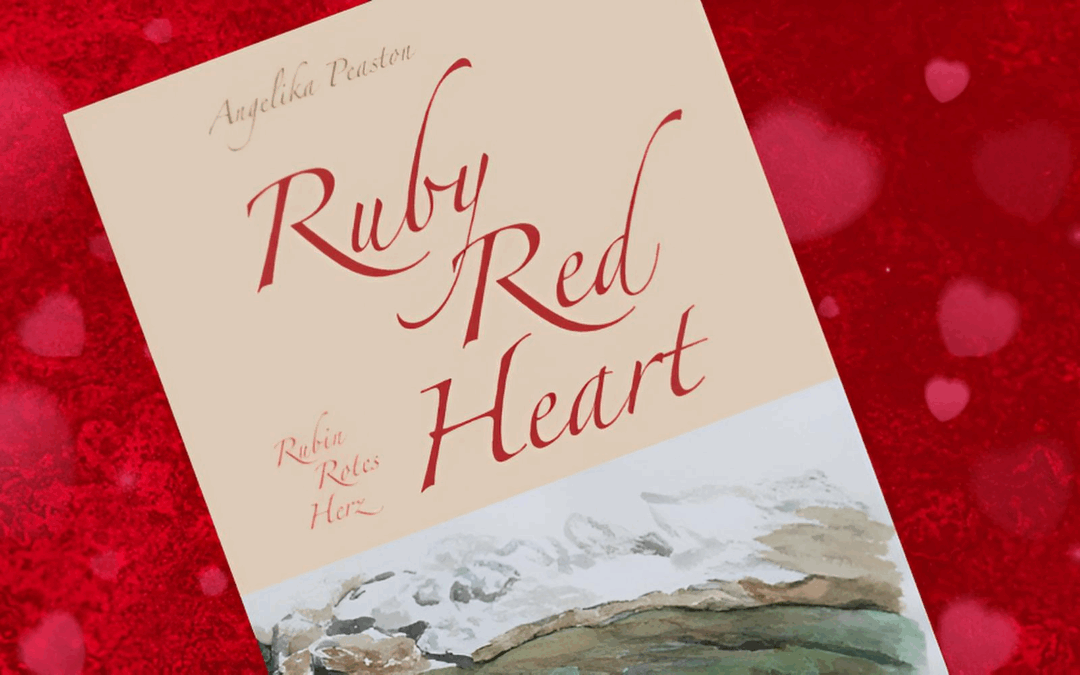
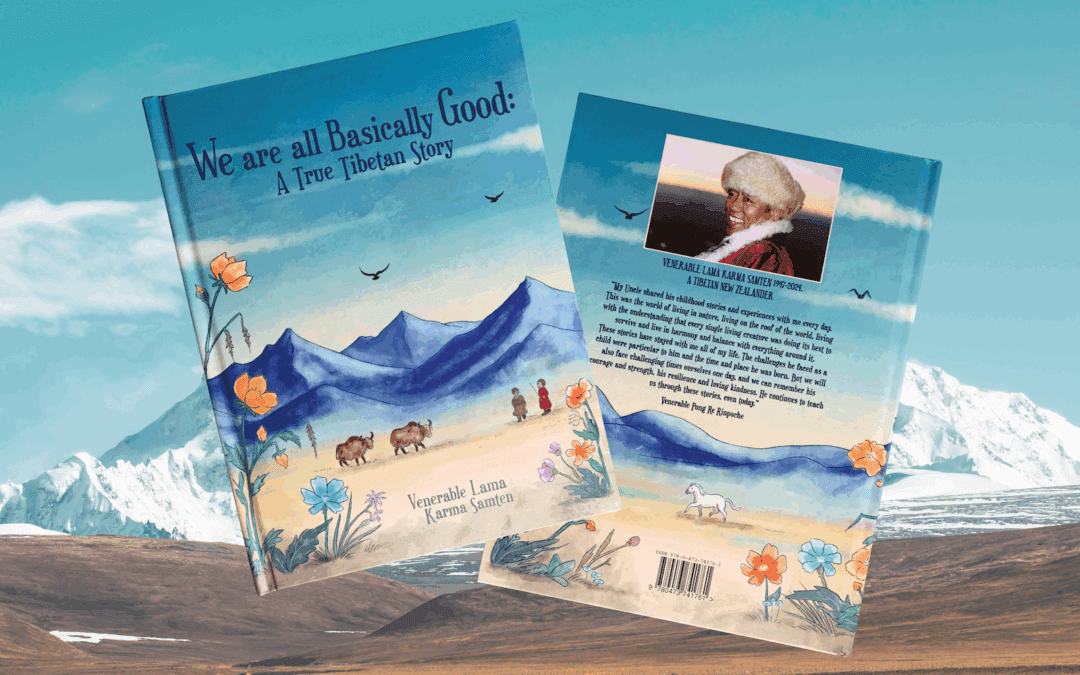
We are all Basically Good by Ven. Lama Karma Samten

We are all Basically Good by Ven. Lama Karma Samten

A True Tibetan Story by Ven. Lama Karma Samten


“All beings are capable of generating compassion.  It is just a matter of the right circumstances.  This story is one of them.”

A beautifully illustrated children’s book, sharing stories from Lama Samten’s childhood in Tibet, his family and arrival in India as a refugee.

Lama’s stories are inspiring and poignant, full of depth, compassion and courage. Perfect for sharing with children, yet also a wonderful book for those much older!

We are all Basically Good: A True Tibetan Story

(Hardback book, just under A4 size, 68 pages)

We have a limited number of copies available for sale at £25 plus postage.

Please contact Elizabeth at admin@marpahouse.org.uk for payment details and to arrange postage.

Before Marpa House…

Before Marpa House…

The history of our building and grounds before they became Marpa House

Marpa House/Kham Tibetan House has a fascinating history, long before its current incarnation as the first Tibetan Buddhist Retreat centre in England.

Rinpoche was assisted in its initial founding and search for a suitable property by several kind students before what was then called ‘All Saints’ Home’ emerged as a potential location for Rinpoche’s centre.

The property was built in 1890 and has a very positive history, both in the building and the gardens, as ‘All Saints’ Home’ was a refuge for homeless children (mainly from London) for 83 years, from its inception by Dr Henry Swete. In fact, ‘Rectory Lane’ is still known by some locals as ‘Home Boys Lane’.

In the late nineteenth century, Dr Henry Swete, as the Lord of Ashdon Rectory Manor, was a very influential figure. He decided to provide a thatched cottage rent-free to the ‘Church of England Society for Providing Homes for Waifs and Strays’. At that time, many orphans were surviving on the streets in the big cities of England, notably in London.

Dr Swete paid half the cost of furnishing that cottage (now a private home). In 1885, the first group of boys arrived from London.  At first, there were six children; then, three more followed quickly to fill the house. Each boy had a mall garden and attended the village school.

The original cottage, however, was in poor condition; so Dr Swete soon decided to build a new house for 12 children close to his Rectory and on land rented from Gonville and Caius College, Cambridge. The new Home was opened on St Michael and All Angels’ Day in 1890 (29th September). After a service at the parish church, the clergy and congregation formed a procession led by a cross-bearer. They made their way to the Home, where Swete conducted a Benediction Service (a type of blessing).

A local committee ran All Saints’ Home, and one of the most prominent early members of the committee was Mrs Brocklebank of Bartlow Hall. Bartlow is a village close by.

The first matron was Annie Wallis; her successor was Ellen Whitehead, who became matron in 1895 and remained in the position for 37 years, playing a significant part in the home’s history.

Problems with the water supply meant that the Home depended upon a nearby well. When this ran dry, water had to be carried up the steep hill from the village. This continued for 48 years, until a mains supply was eventually installed in 1938, the same year that the house was extended to accommodate more boys. The Home closed in 1961 for renovations and didn’t reopen until 1964. It finally closed in 1972.

From its dedication in 1890 until 1972, the house served as a refuge for boys aged 8 to 13. They came from diverse cultural backgrounds, and a few of the former residents have returned to revisit the house and grounds.

Further visits by original residents are welcome by appointment. Please get in touch with the Secretary at mail@marpahouse.org.uk

Paintings on the wall

Around the walls of the original playroom in All Saints’ Home were hand-painted murals of local animals and people. Having been decorated over, they were lost for years.  However, they were uncovered during renovations and redecoration of the shrine room at Marpa House, and some of the beautiful and unique paintings are shown here.

There is a small boy riding on a very large and striking horse called ‘Punch’, a man walking a harnessed working horse, and two pictures of dogs – one a domestic dog, and the other a hound.

All photographs are by courtesy of the late Mr. John Double, resident of Ashdon, and a former member of the All Saints’ Home committee.

The Fullness of Emptiness 

The Fullness of Emptiness 

Emptiness is such a key word in Buddhist teachings (especially in the Heart Sutra, [“form is empty, yet emptiness has no form”]) and yet, so often when it is mentioned we are also told that it is not void at all but has very important positive aspects. How can we understand that?

To me, the key point seems to be that there is something beyond the phenomena we can perceive with our ordinary sense perceptions, and that – when we settle our mind in stillness – we have the chance of being aware of something quite wonderful, something that is very uplifting but also very difficult to describe with the words we have at our disposal. It is not surprising therefore that quite a number of different terms are used in this context; “unborn clear light”, “luminosity”, “primordial essence”, “innate supreme essence”, “vivid awareness” and “Buddha-nature” all seem to point in the same direction.

So why is it called “emptiness”? Nagarjuna (c. 200 CE) is credited with transforming the sutras’ poetic and sometimes paradoxical declarations on emptiness (“form is emptiness and emptiness is form”) into a philosophical system.

When he uses the word “emptiness” it is not to refer to the absence of existence but to the absence of intrinsic existence and, by implication, to the true or ultimate nature of reality. He stated this primarily to refute the idea – especially held by followers of the Sarvastivada School – that phenomena, the things we can perceive with our ordinary senses, have an intrinsic existence.

This was further amplified by Vasubandhu (around 400 CE), of the Yogachara school, who equated Buddha-nature with both emptiness and nirvana.

There are also some fascinating references to the ultimate nature of reality in the Upanishads, which I find very uplifting. (The terms used here are: the Spirit, the Essence, the Truth, God and – in the personified form – Brahman).

As Buddhists we may shy away from reading these Hindu scriptures, but it is worth remembering that these writings contain the distilled wisdom of thousands of years and essentially reflect the cultural/spiritual background the Buddha was born into. The Svetasvatara Upanishad in particular was written down about the time of the Buddha and contains some striking parallels to the Heart Sutra (“When ignorance is dispelled, there is neither day nor night, neither being nor non-being.”).

Here is a very short excerpt: “The Essence is in everything, from the smallest to the largest. The Spirit’s infinity is beyond what is great or small and its radiance illumines all creation. It is beyond form and beyond pain, and those who have seen the Truth of the Spirit are one with it, their life is fulfilled, and they are ever beyond sorrow.” (Quoted from a translation by Juan Mascaró, 1965).

Hartwin Busch © 2024