The Statues

The Statues

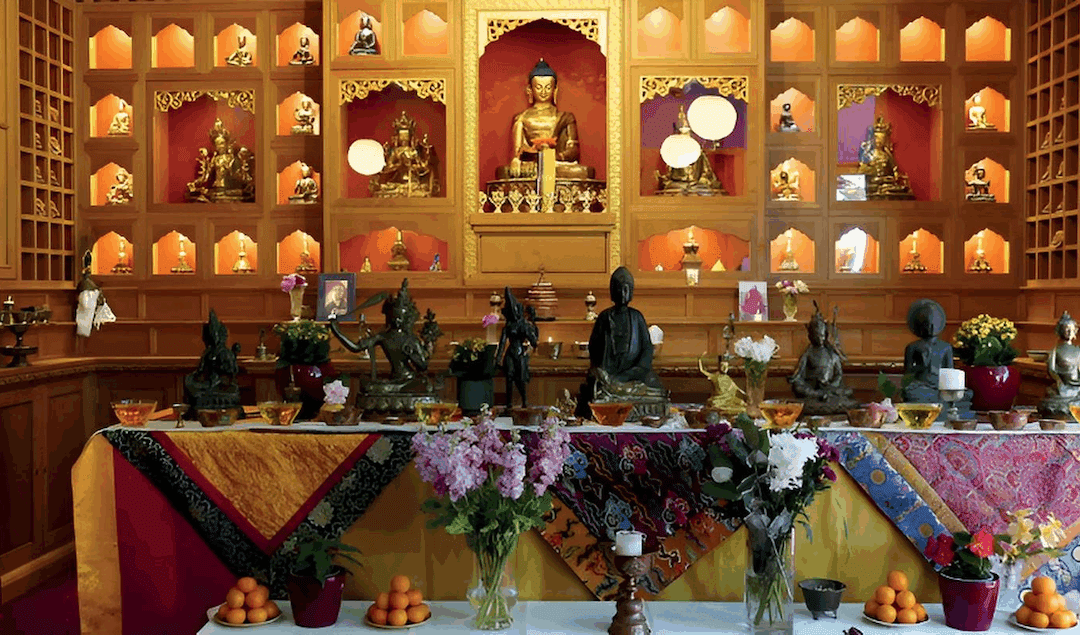
Filling the Statues in the Marpa House shrine room

During the Filling of the Statues, I was asked why we do the filling. So I went to see if I could find a book which might say something about it. I looked for Robert Beer’s book on Tibetan symbols, but couldn’t find it. Instead, I found ‘Buddhist Symbols in Tibetan Culture’ by Dagyab Rinpoche, Wisdom Publications, 1995.

In this book, he describes the Seven Jewels of Royal Power, which are offered in mandala offerings. They are the Precious Wheel, The Precious Jewel, the Precious Queen, the Precious Minister, the Precious Elephant, The Precious Horse and the Precious General. The last one, the Precious General, is replaced by the Precious Householder in some lists. The quality of the Precious Householder is to possess such wealth that disagreeable places are completely filled with jewels and other precious things, unasked. And, the wealth of the Precious Householder is inexhaustible. All the people are fond of such a person, who does not harm others.

From their beautiful exteriors, you might not think that the insides of the statues could in any way be disagreeable. However, in fact, they need to be cleaned before filling to remove bits left over from their casting. Then they are lined with bright, golden-yellow cloth before the precious substances are placed inside them.

Dagyab Rinpoche says that the qualities of all the symbols he describes are to be transferred to the spiritual plane. So, maybe filling the statues can be taken as an inspiration to fill our disagreeable places with spiritual jewels, and to practice unlimited generosity; we may not have unlimited wealth, but we can have the unlimited wish to give. He also encourages his readers to keep in mind the ultimate view of reality, so while filling statues we should remember that the precious substances, the filling process, and we ourselves, are all empty of inherent existence. This lessens our attachment to precious things.

Brian Richardson © 2024
The Life of Venerable Lama Samten

The Life of Venerable Lama Samten

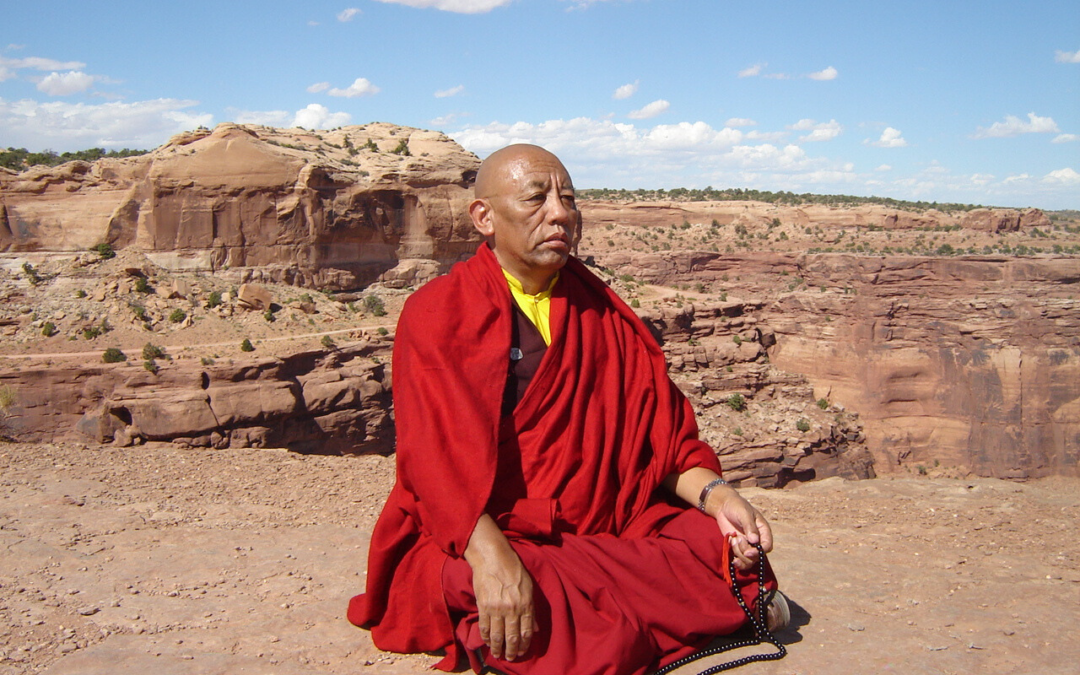
Lama Samten | 1947 – 2024

Although Lama Samten was born in West Tibet at Gertse on 25th February 1947, he identified as a Khampa through his family.  The family lived in a ‘ba,’ a large black tent made from woven yak’s hair, which was approximately 15m by 45m and was home for sixteen people: Lama Samten’s mother, two fathers, four brothers, five sisters, and three servants.

When Lama Samten was five years old, he went to live with an uncle at his monastery, Tagjam Gompa, a Sakya monastery, which housed about a hundred monks. It was here that Lama Samten first took refuge. He was taught how to sit up straight in the lotus posture and to chant “Om mani peme hung”.

In 1959, the Chinese army invaded Tibet, and the 10-year-old Lama Samten escaped with his family.  It was a very dangerous time and many people perished.

By the time the family reached the border region between India and Nepal, everyone, except for Lama Samten and his sister, was sick, were hospitalised and died.  His sister was adopted by a Nepalese family, which meant that of the original sixteen members of his family, now there was only Lama Samten left, a child of 13.

He joined H.E. Beru Khyentse’s monastery, taking novice monk vows at 16 and full ordination at 21.  Lama Samten completed two traditional three-year retreats and then spent another 3 years in solitary retreat in a forest near the retreat centre, receiving instruction from H.E. Beru Khyentse Rinpoche and Venerable Kalu Rinpoche. He was preparing to spend the rest of his life in retreat but in 1981, His Holiness the 16th Gyalwa Karmapa requested Lama Samten to go to Aotearoa/New Zealand.

Lama Samten spent 24 years in NZ, developing the Buddha Dharma. With the help of skilled students, he established a traditional temple at Kaukapakapa, built the biggest Buddha statue in the Southern Hemisphere, and a row of 8 stupas. He developed the use of traditional Tibetan healing practices and assisted Tibetan Doctors on tours of NZ.

Lama Samten travelled throughout NZ, and he especially enjoyed the McKenzie Basin in the South Island, with its mountains and lakes.  He was known to conduct fire pujas there to placate the Naga spirits of the area.  He also loved the hot pools throughout the country and a quick trip to the hot pools at the end of a day of Ngondro practice was always a possibility.

He is the author of many books on Dharma practice and he guided a team of students in the translation of the Ngondro text, producing The Message Book which has been used by many students around the world for their Ngondro practice.  He was the creative force behind the 2004 Grammy Award-winning music recording Sacred Tibetan Chant – the monks of Sherab Ling and has recorded a series of his own chanting CDs entitled Sounds of Liberation. 

Lama Samten gathered people to him and took care of his many students. He retired in 2004, but continued to teach internationally, guiding his students in their practice and taking them on pilgrimage to holy Buddhist places around the world.  His teachings in English were known for their direct and earthy manner, sprinkled with a sense of humour.  He had the ability to cut through samsaric demands and concerns.    He was the Lambchop Lama, the Cup 0f Tea Lama, but mostly he was the 50:50 Lama, reminding us of the Middle Way and his strongest message was always – do your practice.

Jan Crawford © 2024